
The Rise of Strategic Narratives in Global Politics
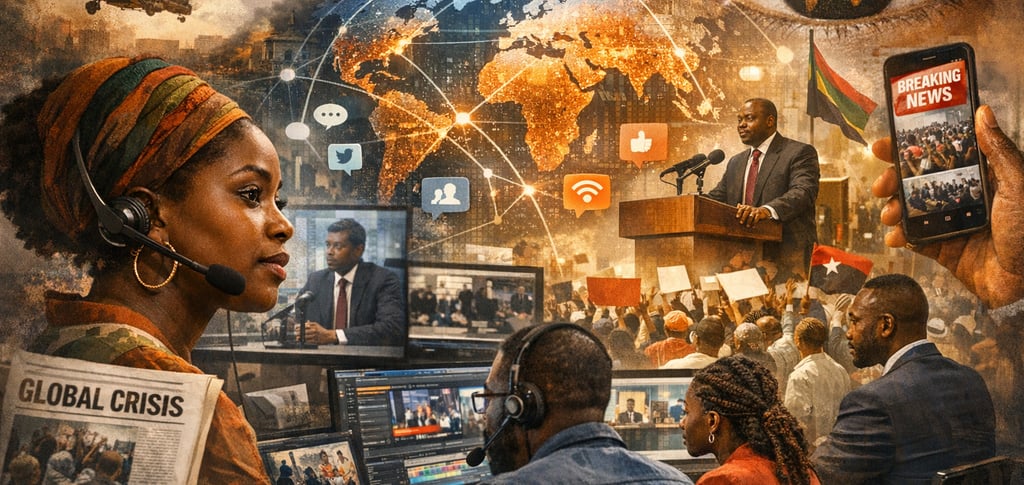
In contemporary global politics, power is no longer exercised solely through military strength, economic capacity, or institutional authority. Increasingly, it is shaped by the ability to construct, control, and disseminate narratives. Strategic narratives—coherent frameworks that define reality, assign meaning, and guide perception—have become central instruments of influence in an interconnected world.
ALL NEWSPOLITICS
The Rise of Strategic Narratives in Global Politics
In contemporary global politics, power is no longer exercised solely through military strength, economic capacity, or institutional authority. Increasingly, it is shaped by the ability to construct, control, and disseminate narratives. Strategic narratives—coherent frameworks that define reality, assign meaning, and guide perception—have become central instruments of influence in an interconnected world.
At their core, strategic narratives are not simply messages; they are systems of interpretation. They determine how events are understood, how actors are perceived, and how decisions are justified. In this sense, they operate at a deeper level than traditional communication, shaping not just opinions but the underlying logic through which those opinions are formed.
The importance of narratives has grown alongside the expansion of digital communication. Information now moves at unprecedented speed, crossing borders and reaching global audiences in real time. This environment creates both opportunity and risk. On one hand, it allows for rapid dissemination of ideas; on the other, it increases the potential for distortion, fragmentation, and manipulation.
States and political actors are increasingly investing in narrative construction as a strategic priority. This includes not only public diplomacy and official communication but also more subtle forms of influence, such as cultural production, media engagement, and digital presence. The objective is not merely to inform, but to frame reality in ways that align with strategic interests.
Competing narratives often emerge around the same set of events. A single geopolitical development can be interpreted in multiple ways, depending on the perspective and objectives of the actor presenting it. These competing interpretations can shape international responses, influence alliances, and alter the course of political processes.
Narratives also play a critical role in domestic politics. Governments use them to build legitimacy, mobilize support, and manage dissent. In times of crisis, the ability to provide a coherent and credible narrative can determine whether a situation stabilizes or escalates. Conversely, the absence of a clear narrative can lead to confusion, mistrust, and fragmentation.
The role of non-state actors in narrative formation is increasingly significant. Media organizations, technology platforms, think tanks, and even individuals with large digital followings contribute to the construction and dissemination of narratives. This decentralization of influence makes the landscape more dynamic, but also more difficult to control.
Technology, particularly artificial intelligence, is further transforming this domain. AI can generate content, analyze audience behavior, and optimize messaging strategies with a level of precision that was previously unattainable. While this enhances efficiency, it also raises concerns about authenticity, accountability, and the potential for large-scale manipulation.
Another important dimension is the longevity of narratives. Unlike immediate political actions, narratives can persist over time, shaping perceptions long after the original events have passed. They can become embedded in collective memory, influencing future decisions and interactions. In this way, narrative control is not only about the present, but also about the future.
Despite their power, strategic narratives are not inherently stable. They must be continuously maintained, adapted, and reinforced. Changes in context, new information, or contradictory evidence can weaken or even dismantle existing narratives. This creates an ongoing process of construction and reconstruction.
The ethical implications of narrative strategy cannot be ignored. The deliberate shaping of perception raises questions about truth, transparency, and responsibility. While all political communication involves some level of framing, the scale and sophistication of modern narrative strategies amplify their impact and potential consequences.
Ultimately, the rise of strategic narratives reflects a broader transformation in the nature of power. Influence is no longer determined solely by what actors do, but by how those actions are understood. In a world where perception and reality are increasingly intertwined, the ability to shape narratives is becoming one of the most decisive forms of political control.
Understanding this dynamic is essential for navigating contemporary politics. Whether at the level of states, institutions, or individuals, those who can effectively construct and manage narratives will hold a significant advantage. In the evolving architecture of global power, stories are no longer secondary—they are structural.
— International Affairs NewsPaper™


Summary and Closing
The rise of strategic narratives marks a profound shift in the architecture of global power. In today’s interconnected world, influence is no longer measured solely by military or economic strength, but by the capacity to define meaning and shape perception. Africa’s emerging voices in media, diplomacy, and digital platforms are contributing to this transformation, asserting perspectives that challenge traditional global frameworks. As narratives become instruments of legitimacy and control, the true contest of the 21st century lies not only in territory or trade—but in the ability to tell the story that defines reality itself.
→ All News

