
The Politics of Global Supply Chains
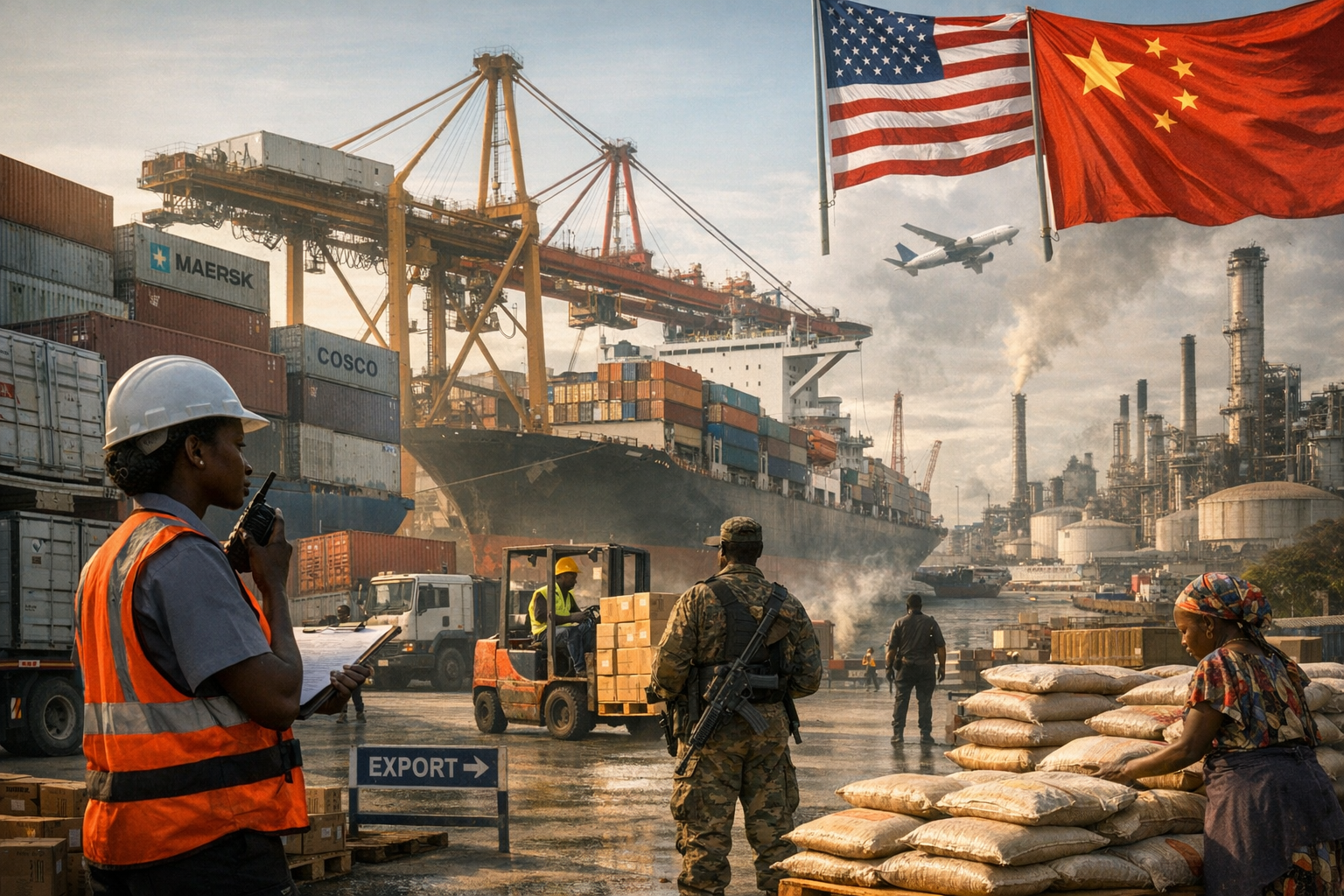
Global supply chains, once considered purely economic systems designed for efficiency and cost optimization, have become central instruments of political strategy. In an increasingly interconnected world, the ability to produce, move, and control goods is no longer just a matter of commerce—it is a matter of power.
ALL NEWSPOLITICS
The Politics of Global Supply Chains
Global supply chains, once considered purely economic systems designed for efficiency and cost optimization, have become central instruments of political strategy. In an increasingly interconnected world, the ability to produce, move, and control goods is no longer just a matter of commerce—it is a matter of power.
For decades, globalization promoted the idea that interdependence would reduce conflict and increase stability. Countries specialized, production dispersed, and supply chains expanded across continents. Efficiency became the guiding principle, often at the expense of resilience. This model delivered growth, but it also created vulnerabilities that are now impossible to ignore.
Recent disruptions—ranging from pandemics to geopolitical tensions—have exposed the fragility of these systems. Delays, shortages, and bottlenecks have demonstrated that supply chains are not neutral mechanisms; they are deeply political infrastructures. When disrupted, they can affect not only economies but also national security and social stability.
As a result, governments are re-evaluating their dependence on global networks. The concept of “strategic autonomy” has gained prominence, with countries seeking to secure critical sectors such as pharmaceuticals, semiconductors, food, and energy. This does not necessarily mean abandoning globalization, but rather redefining its terms.
One of the most significant shifts is the move toward diversification. Instead of relying on a single source or region, countries and companies are developing multiple supply routes and partnerships. This approach reduces risk but also increases complexity and cost. The balance between efficiency and resilience is becoming a central strategic question.
At the same time, supply chains are being reshaped by geopolitical competition. Major powers are using trade policies, tariffs, and regulatory frameworks to influence global production networks. Access to key technologies and materials is increasingly restricted or conditioned, turning supply chains into tools of leverage.
Technology plays a dual role in this transformation. On one hand, digitalization improves visibility, coordination, and efficiency. On the other, it introduces new vulnerabilities, particularly in the form of cyber threats. A disruption in digital systems can have immediate and widespread physical consequences, affecting everything from manufacturing to logistics.
Another emerging trend is the regionalization of supply chains. While global networks remain important, there is a growing emphasis on building stronger regional ecosystems. This allows for faster response times, greater control, and reduced exposure to distant disruptions. However, it also risks fragmenting the global economy into competing blocs.
Developing countries face both opportunities and challenges within this new landscape. As companies seek alternative production bases, new regions can attract investment and integrate into global networks. However, this requires infrastructure, regulatory stability, and the ability to meet international standards. Without these conditions, opportunities may remain unrealized.
Environmental considerations are also influencing supply chain strategies. Sustainability is no longer a secondary concern; it is becoming a core requirement. Companies and governments are under increasing pressure to reduce emissions, ensure ethical sourcing, and improve transparency. This adds another layer of complexity to already intricate systems.
The private sector remains a key actor in shaping these dynamics. Multinational corporations, logistics companies, and technology providers are making decisions that influence global flows of goods and capital. Their strategies often reflect both market considerations and geopolitical realities, blurring the line between business and politics.
Ultimately, the transformation of global supply chains reflects a broader shift in how power is understood and exercised. Control over production and distribution is no longer just an economic advantage—it is a strategic asset. In this context, supply chains are not just pathways for goods; they are infrastructures of influence.
The future will likely be defined by a hybrid model, where global integration coexists with strategic control. The challenge for policymakers and businesses alike is to navigate this complexity without undermining the benefits of interconnectedness. In a world where disruption is no longer an exception but a constant, adaptability will be the defining factor.
— International Affairs NewsPaper™


Summary and Closing
Global supply chains have evolved into the arteries of modern power—where commerce, technology, and geopolitics converge. Their transformation reflects a world redefining control, resilience, and autonomy. For Africa and other emerging regions, this shift presents both opportunity and responsibility: to build infrastructure, assert sovereignty, and shape the flow of global production. In an era where disruption is constant, adaptability and strategic foresight will determine not only economic success but political relevance in the architecture of global influence.
→ All News

