
Technology and Political Control in the Digital Age
The relationship between technology and political power has evolved from a supportive function into a central pillar of governance. In the modern era, control over digital systems is increasingly synonymous with control over information, behavior, and, ultimately, political stability. What was once considered an auxiliary domain has become a strategic battlefield.
ALL NEWSPOLITICS
Technology and Political Control in the Digital Age
The relationship between technology and political power has evolved from a supportive function into a central pillar of governance. In the modern era, control over digital systems is increasingly synonymous with control over information, behavior, and, ultimately, political stability. What was once considered an auxiliary domain has become a strategic battlefield.
Governments across the world are recognizing that technological infrastructure is no longer neutral. Platforms, algorithms, and data flows shape public perception, influence decision-making, and redefine the boundaries of political engagement. The capacity to manage and direct these systems is rapidly becoming one of the most decisive factors in maintaining authority.
At the core of this transformation lies data. Data is not simply information; it is a tool of prediction and influence. Through advanced analytics, governments and institutions can identify patterns, anticipate reactions, and adjust strategies in real time. This creates a dynamic form of governance—one that is less reactive and more anticipatory.
However, the use of data for political purposes raises fundamental questions about privacy, autonomy, and the limits of state power. The same systems that enable efficiency and responsiveness can also be used to monitor, control, and restrict. The line between governance and surveillance is becoming increasingly blurred, and in many cases, indistinguishable.
Artificial intelligence further amplifies this dynamic. AI systems are capable of processing vast amounts of information, optimizing decision-making processes, and even generating narratives. In political contexts, this means the ability to shape discourse at scale. Messaging can be tailored, targeted, and disseminated with unprecedented precision, influencing not only what people think, but how they think.
Social media platforms play a critical role in this ecosystem. They function as both communication channels and behavioral environments. Political actors—whether state or non-state—use these platforms to mobilize support, manage perception, and, in some cases, destabilize opponents. The decentralization of communication has not eliminated control; it has redistributed it.
At the same time, technology is creating new forms of resistance. Decentralized networks, encrypted communication, and independent digital platforms are enabling individuals and groups to operate outside traditional systems of control. This creates a constant tension between centralization and decentralization, between authority and autonomy.
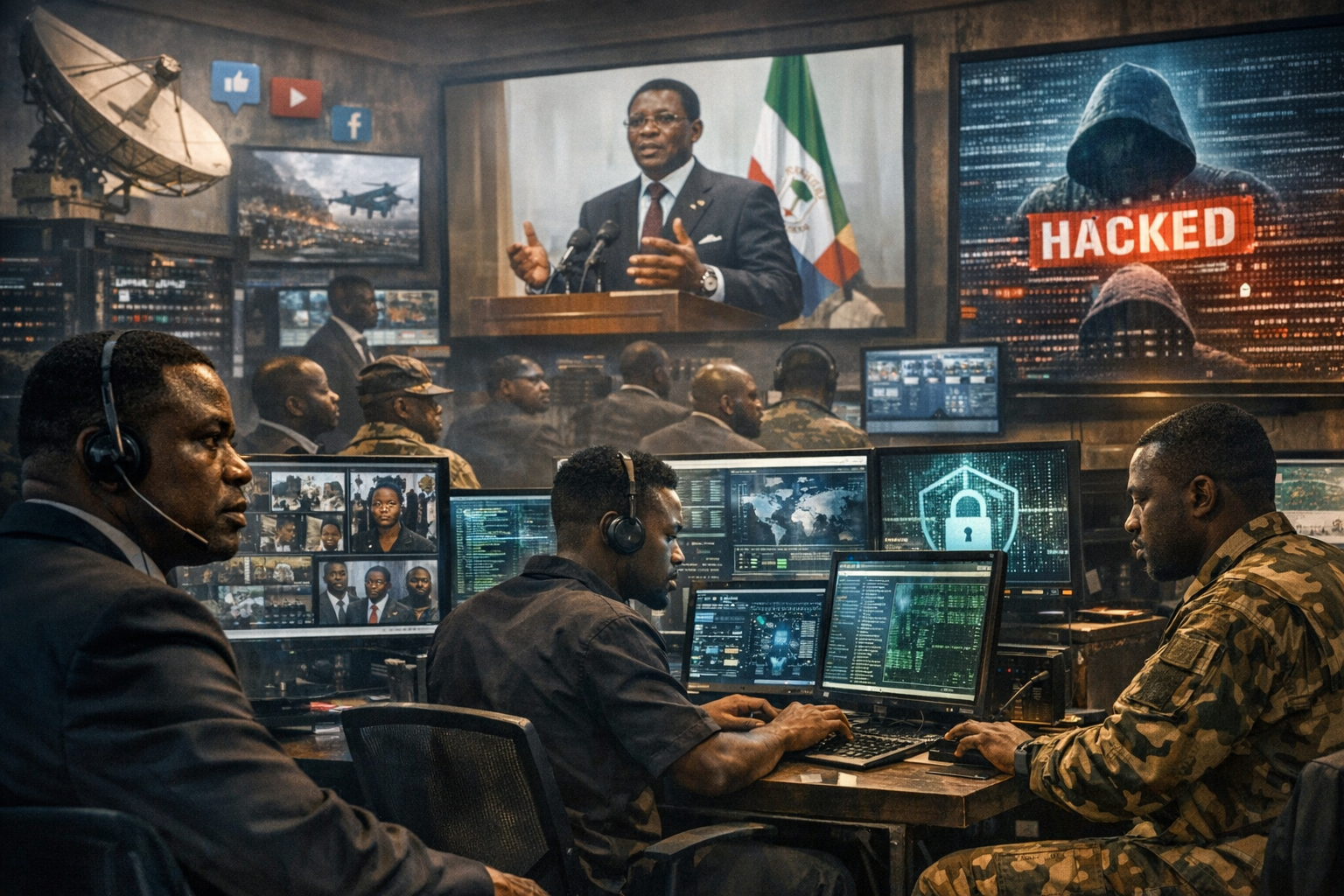
Cybersecurity has also emerged as a key dimension of political control. The ability to protect—or disrupt—digital infrastructure is now a matter of national security. Cyber operations can influence elections, disable critical systems, and reshape geopolitical dynamics without a single physical confrontation. Power is no longer defined solely by military capability, but by digital resilience and offensive capacity.
Despite these developments, the fundamental question remains unresolved: who controls the controllers? As technology becomes more integrated into governance, the need for oversight, accountability, and ethical frameworks becomes more urgent. Without them, the concentration of technological power risks undermining the very systems it is meant to support.
In this evolving landscape, political control is no longer exercised only through laws and institutions. It is embedded in code, algorithms, and digital architectures. Understanding this shift is essential for navigating the future of governance, where the lines between technology and power are no longer distinct, but fully intertwined.
— International Affairs NewsPaper™


Summary and Closing
Technology has become the new architecture of political power—an invisible framework shaping governance, influence, and control. In the digital age, authority is exercised not only through institutions but through algorithms, data, and code. As Africa and other emerging regions expand their digital infrastructure, the balance between innovation and oversight becomes critical. The future of governance will depend on how societies harness technology to empower rather than constrain, ensuring that progress in connectivity does not come at the cost of freedom or accountability. Understanding this dynamic is essential for building resilient, ethical systems in an era where power is increasingly digital.
→ All News

