
Global Power Realignment in a Fragmented World
The global political landscape is undergoing a profound transformation, marked not by a single dominant shift, but by a series of overlapping realignments that are redefining power, influence, and governance. What was once considered a stable international order is now increasingly fluid, shaped by competing interests, regional ambitions, and the erosion of traditional alliances.
ALL NEWSPOLITICS
Global Power Realignment in a Fragmented World
The global political landscape is undergoing a profound transformation, marked not by a single dominant shift, but by a series of overlapping realignments that are redefining power, influence, and governance. What was once considered a stable international order is now increasingly fluid, shaped by competing interests, regional ambitions, and the erosion of traditional alliances.
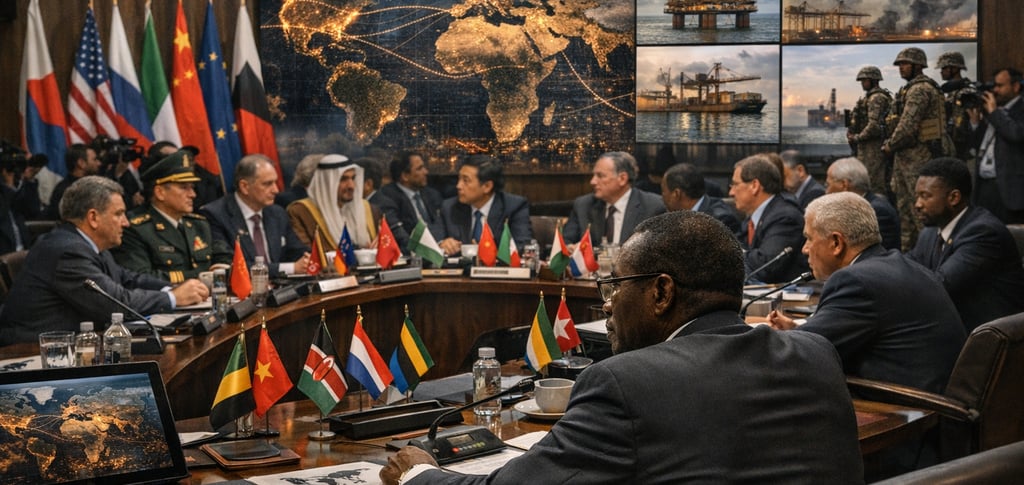
At the center of this transformation lies a growing multipolarity. The era in which a limited number of global powers dictated the rules of engagement is gradually giving way to a more complex system where emerging economies, regional blocs, and strategic coalitions are asserting themselves with increasing confidence. This is not merely a redistribution of power—it is a redefinition of how power itself is exercised.
One of the key drivers of this shift is the changing nature of economic influence. Trade routes, supply chains, and resource control have become strategic tools rather than purely economic mechanisms. Nations are no longer just competing for markets; they are competing for control over the systems that enable those markets to function. This includes digital infrastructure, energy corridors, and technological ecosystems.
Simultaneously, political alliances are becoming more transactional and less ideological. Partnerships that were once built on shared values are now increasingly shaped by mutual benefit and strategic necessity. This has led to unexpected alignments, where countries with differing political systems collaborate on specific objectives while maintaining broader strategic distance.
Another defining feature of the current moment is the rise of regional power centers. From Africa to Southeast Asia, regions that were historically considered peripheral are now emerging as critical arenas of influence. These regions are not only attracting investment but are also shaping global agendas in areas such as climate policy, trade, and security.
However, this transformation is not without risk. The fragmentation of global power creates uncertainty, and uncertainty often leads to instability. Without clear mechanisms for coordination, the potential for conflict—both economic and geopolitical—increases. The challenge, therefore, is not only to navigate this new landscape but to build systems that can sustain it.
In this context, leadership is being redefined. It is no longer sufficient to hold power; the ability to manage complexity, build flexible alliances, and anticipate systemic shifts is becoming the true measure of influence. Countries and institutions that fail to adapt risk becoming irrelevant, regardless of their historical position.
Ultimately, the current phase of global realignment is not a temporary disruption—it is a structural transition. The systems that emerge from this period will shape the trajectory of international relations for decades to come. Understanding this shift is not optional; it is essential for anyone seeking to operate effectively in the modern political environment.
— International Affairs NewsPaper™


Conclusion
The fragmentation of global power is not a passing disruption but a structural transformation that demands new forms of leadership and systemic resilience. In this evolving multipolar order, Africa and other emerging regions are no longer peripheral—they are becoming central arenas of influence. Navigating this complexity requires foresight, adaptability, and the ability to build sustainable systems that transcend ideology and respond to real strategic needs. Understanding and engaging with this shift is essential for any actor seeking relevance in the decades ahead.
→ All News

