
Africa’s Strategic Position in Global Politics
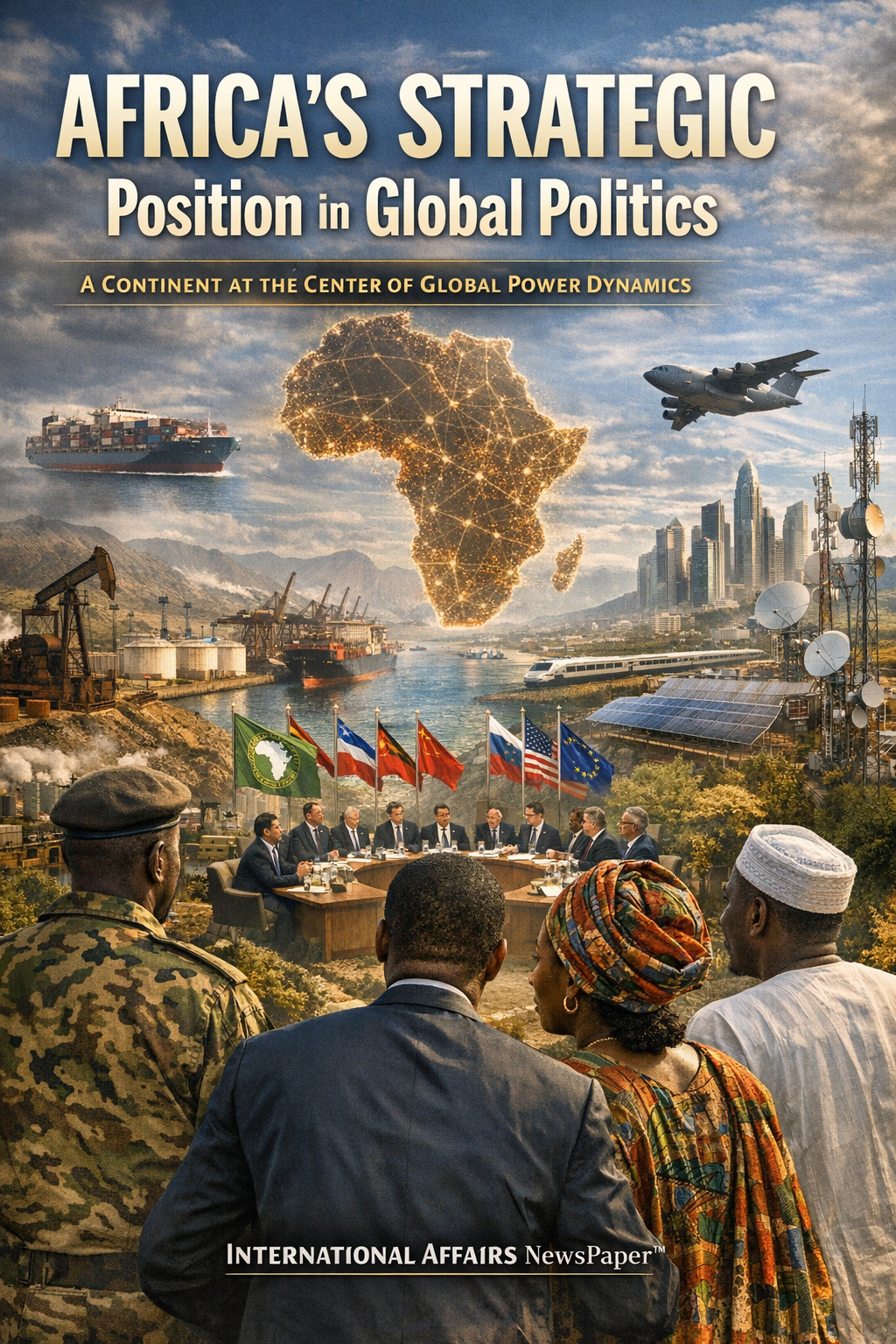
Africa is no longer a peripheral actor in global politics. It is increasingly becoming a central arena where economic interests, geopolitical strategies, and future-oriented investments converge. Far from the outdated narratives that once defined its role, the continent is now positioned as one of the most consequential regions in shaping the next phase of the global order.
ALL NEWSPOLITICS
Africa’s Strategic Position in Global Politics
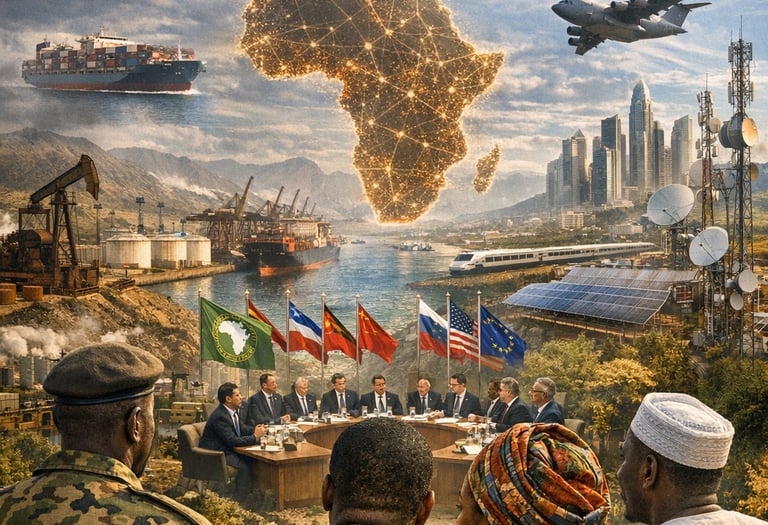
Africa is no longer a peripheral actor in global politics. It is increasingly becoming a central arena where economic interests, geopolitical strategies, and future-oriented investments converge. Far from the outdated narratives that once defined its role, the continent is now positioned as one of the most consequential regions in shaping the next phase of the global order.
At the heart of Africa’s strategic relevance lies its demographic trajectory. With one of the fastest-growing and youngest populations in the world, the continent represents not only a vast labor force but also a rapidly expanding consumer market. This demographic reality is attracting global attention, as nations and corporations seek to position themselves within what is widely regarded as one of the last major frontiers of economic expansion.
Natural resources further reinforce Africa’s importance. The continent holds significant reserves of critical minerals, energy resources, and agricultural potential. In an era defined by technological transformation and energy transition, access to these resources is becoming increasingly strategic. From rare earth elements essential for digital technologies to vast energy reserves, Africa is central to multiple global supply chains.
However, Africa’s strategic value is not limited to its resources or population. Geography plays a decisive role. Positioned between major global trade routes and connecting key regions, the continent is a logistical and maritime crossroads. Control over ports, corridors, and infrastructure projects within Africa has implications that extend far beyond its borders.
Global powers are acutely aware of this reality. The growing presence of multiple international actors—each pursuing distinct but overlapping interests—has transformed Africa into a competitive geopolitical space. Investments, partnerships, and development initiatives are no longer purely economic; they are strategic moves within a broader contest for influence.
Yet, this external interest presents both opportunities and risks. On one hand, it brings capital, technology, and infrastructure development. On the other, it raises concerns about dependency, unequal agreements, and the potential erosion of sovereignty. The challenge for African nations is to navigate these dynamics in a way that maximizes benefit while maintaining strategic autonomy.
Internal factors are equally critical. Governance, institutional capacity, and policy coherence will determine how effectively African countries leverage their position. The ability to negotiate from a position of strength, implement long-term strategies, and ensure transparency will shape outcomes more than external conditions alone.
Regional integration is another key dimension. Initiatives aimed at creating larger, unified markets and improving intra-African trade have the potential to significantly enhance the continent’s bargaining power. A more integrated Africa is not only economically stronger but also politically more influential on the global stage.
Technology is also reshaping Africa’s trajectory. Digital platforms, mobile infrastructure, and innovation ecosystems are enabling new forms of economic participation and governance. In many cases, Africa is not simply adopting global technologies but adapting and redefining them in ways that respond to local realities.
Despite these positive developments, structural challenges remain. Inequality, infrastructure gaps, and political instability in certain regions continue to limit potential. Addressing these issues requires not only internal reform but also a recalibration of how external partnerships are structured and managed.
Ultimately, Africa’s strategic position in global politics is not predetermined. It is being actively constructed through decisions, policies, and alliances. The continent has the resources, the demographic momentum, and the geopolitical relevance to play a defining role in the 21st century. The question is not whether Africa matters—it is how it chooses to assert its importance.
— International Affairs NewsPaper™

Summary and Closing
Africa’s ascent in global politics marks a decisive turning point in the architecture of international power. The continent’s demographic vitality, resource wealth, and strategic geography position it not as a passive participant, but as a defining force in shaping the global order of the 21st century. Its challenge—and opportunity—lies in transforming external interest into internal strength, leveraging partnerships without compromising sovereignty, and asserting a unified voice in global decision-making. The future of world politics will not be written around Africa, but with Africa at its center.
→ All News

